Japan travel extras
Shrine or temple? How to tell the difference
Torii or gate, clap or no clap, lion-dogs or fierce guardians. The quick way to know where you are, and how to pray at each.
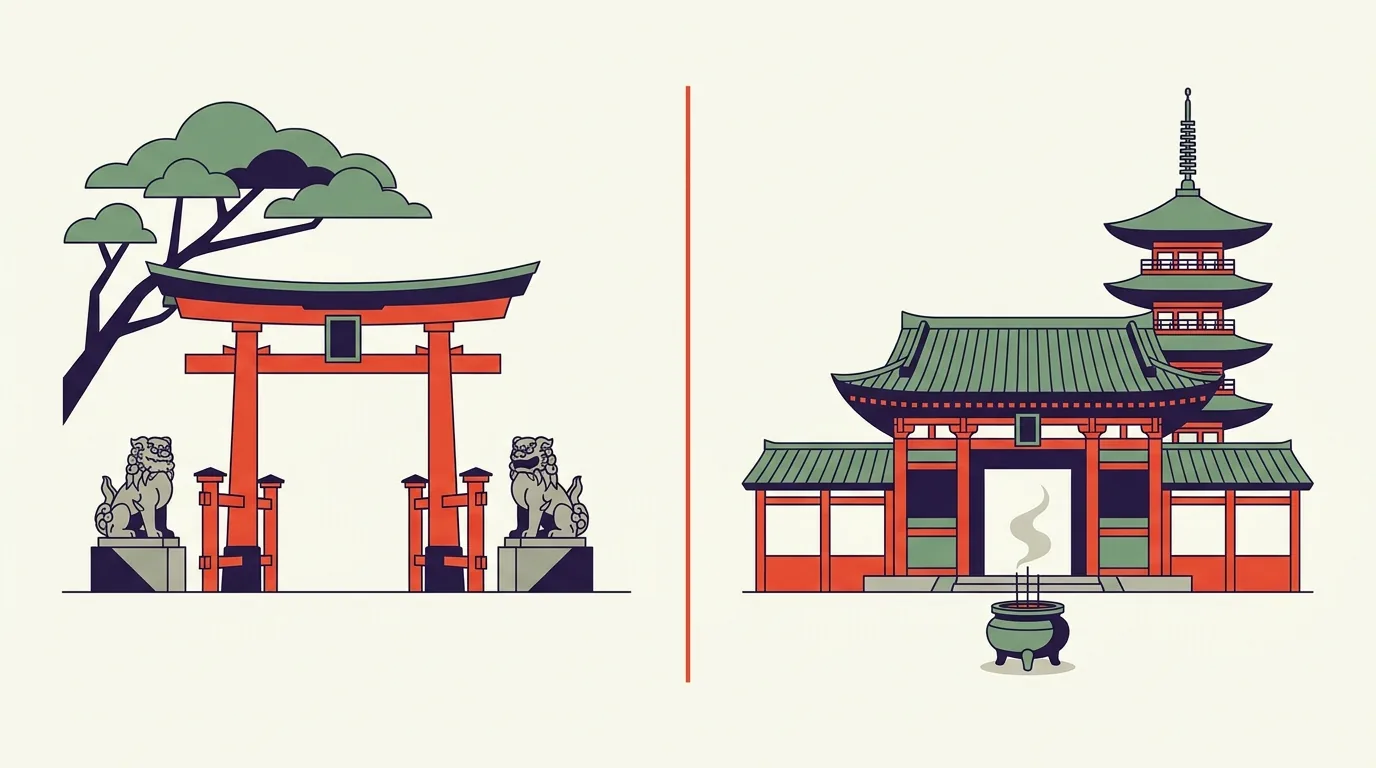
Japan has two main religious traditions, and most people follow both without seeing any contradiction. Shrines belong to Shinto, Japan’s native faith in the gods of nature and ancestors. Temples belong to Buddhism, which arrived from mainland Asia in the 6th century. For more than a thousand years the two were closely mixed, and many sites still share the same grounds. Once you know what to look for, telling them apart is easy.
The quick checklist
| Shrine 神社 | Temple 寺 | |
|---|---|---|
| Religion | Shinto | Buddhism |
| Name ends in | -jinja, -jingu, -taisha, -gu | -ji, -dera, -in |
| Entrance | A torii gate, often vermilion | A large roofed wooden gate (sanmon) |
| Guardians | A pair of lion-dogs (komainu), or foxes at Inari shrines | Two fierce muscular guardians (Niō) inside the gate |
| How to pray | Two bows, two claps, one bow | Hands together quietly, no clapping |
| Smoke | Rarely | A large incense burner is common |
| Clergy | Priests (kannushi) and shrine maidens (miko) | Monks, often with shaved heads |
| Graves | Almost never | Often a cemetery on the grounds |
The one mistake to avoid
Don’t clap at a temple. At a Buddhist temple, press your palms together in front of your chest (合掌, gasshō), bow slightly and pray silently. You can still leave a coin in the offering box and bow before and after.
Incense at temples
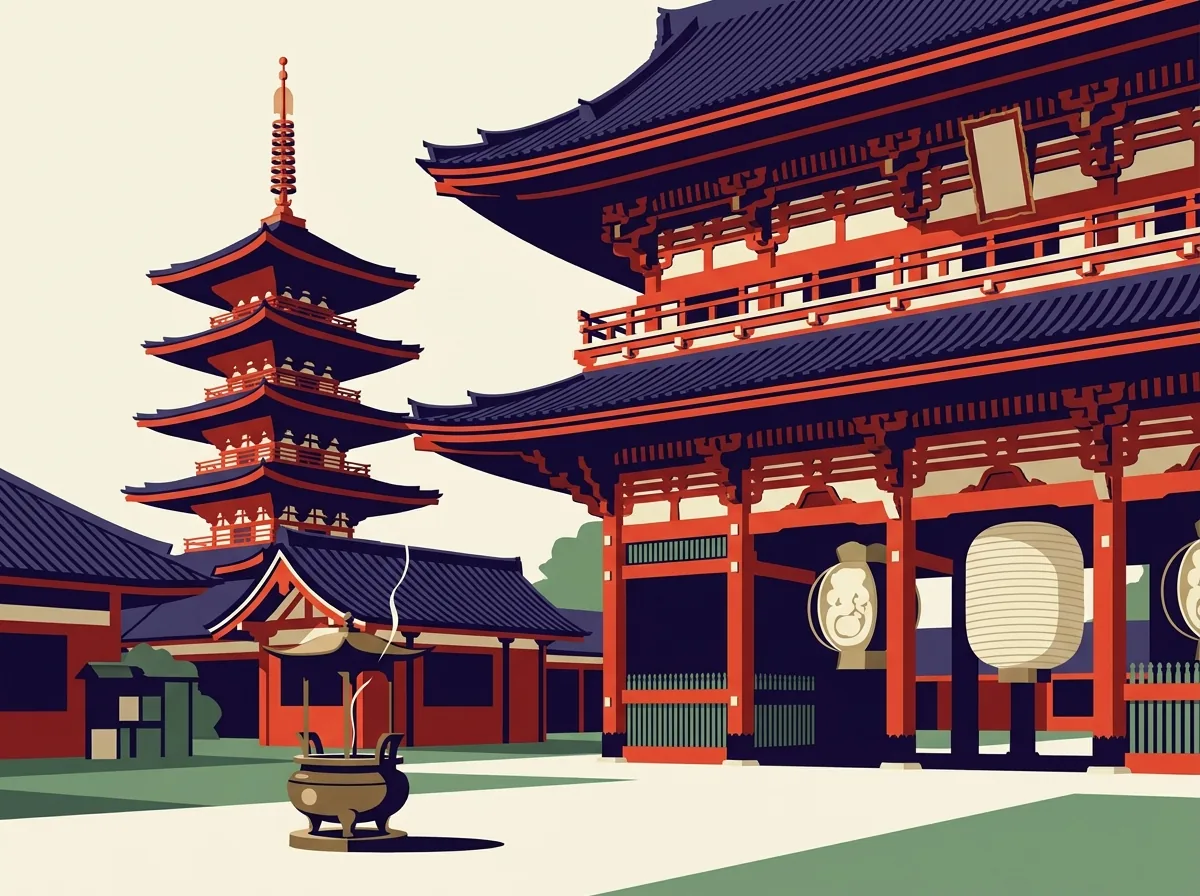
Many temples have a large bronze burner (常香炉) in the courtyard. You can buy a bundle of incense for a small fee, light it and stand it in the ash. People waft the smoke over their bodies, especially toward the head or any part that needs healing, because the smoke is believed to bring good health. Sensō-ji in Tokyo is the famous example.
Things both share
- Charms, fortunes and stamp books. Omamori, omikuji and goshuin are sold at both. Some collectors keep separate books for shrines and temples.
- Purification basins. Temples often have one too. Wash the same way you would at a shrine.
- Respect over rules. Nobody expects visitors to follow every custom perfectly. Speaking quietly, not blocking the prayer area and following posted signs matter far more.
Places that are both
Before 1868, many sites combined shrine and temple buildings. The government separated them, but you’ll still find a small shrine on a temple’s grounds, or the other way around. When in doubt, look at the structure right in front of you: a torii means shrine etiquette, and a roofed gate or incense burner means temple etiquette.
Ready for the full step-by-step? Read how to visit a Japanese shrine.