Bathing culture
The bath as a quiet practice
Why a Japanese soak feels more like meditation than a wash, and how to get the most out of it.
 Illustration
Most first-timers expect a Japanese bath to be about getting clean. The washing actually happens before you get in, sitting on a low stool at the shower. The soak afterwards is for doing nothing at all.
A room built for stillness
Everything about a bath slows you down. You leave your shoes at the door, your clothes in a basket and your phone in a locker. You can’t swim, splash or talk loudly. There’s nothing to do but sit in water that’s a little hotter than comfortable, usually 40–42°C, and let your breathing settle to match it.
Japanese has a phrase for the sound you make as you lower yourself in: はぁ〜, a long exhale. Nobody teaches it, but almost everyone does it. It’s the moment your body notices it has nowhere else to be.
The point is not to think about relaxing. The heat does the work, and you let it.
Hadaka no tsukiai: being equal without clothes
裸の付き合い (hadaka no tsukiai), “naked relationships”, describes the social side of bathing. Without suits, uniforms or labels, a company president and a student share the same water on the same terms. Conversations in a bath are low and unhurried, and silence is just as normal.
A simple routine to try
- Wash slowly. Treat the shower as the start, not a chore. Warm water, soap, rinse.
- Enter in stages. Pour bath water over your feet, then legs, then shoulders, and lower yourself in over half a minute.
- Breathe out longer than you breathe in. Let your shoulders drop below the surface.
- Stay 5 to 10 minutes. Get out before you feel dizzy, cool off on a bench, then go back in.
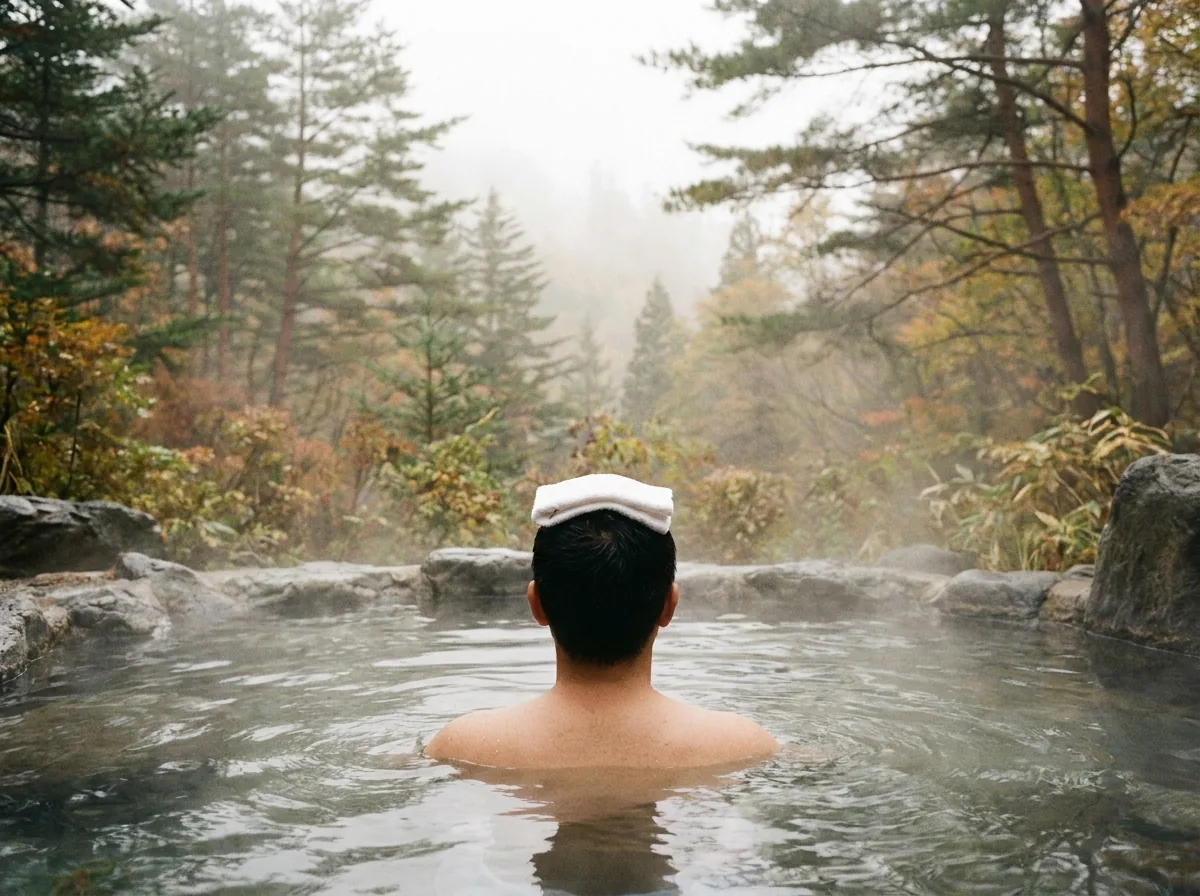
- Try the outdoor bath last. Cool air on your face with hot water around you is the classic 露天風呂 (rotenburo) feeling.
Totonou: the sauna version
Japan’s recent sauna boom gave this feeling a new name: ととのう (totonou), “to come into balance”. You go through the sauna, then a cold plunge, then rest in a chair outdoors, two or three times. The deep, slightly floaty calm that arrives during the rest is the goal. Many city saunas are relaxed about tattoos, so this is an easy way in if onsen rules have kept you out.
Why it feels different from a hot tub
A hot tub is entertainment. A Japanese bath is closer to a habit, like a walk after dinner. People go every day, often at the same time, and many say it’s where they sort out their thoughts. You don’t need to believe in anything to feel it. Heat, water, quiet and a few rules that stop you rushing are enough.